
A Starfleet India Flagship Report
Space Economy 2036: The India Blueprint
How India can finance a US$44 billion space economy, from grants to capital markets. A comprehensive analysis of India’s capital architecture for the next decade.
Written & edited by Akshat Johri, Founder & CEO, Starfleet India Capital Advisors
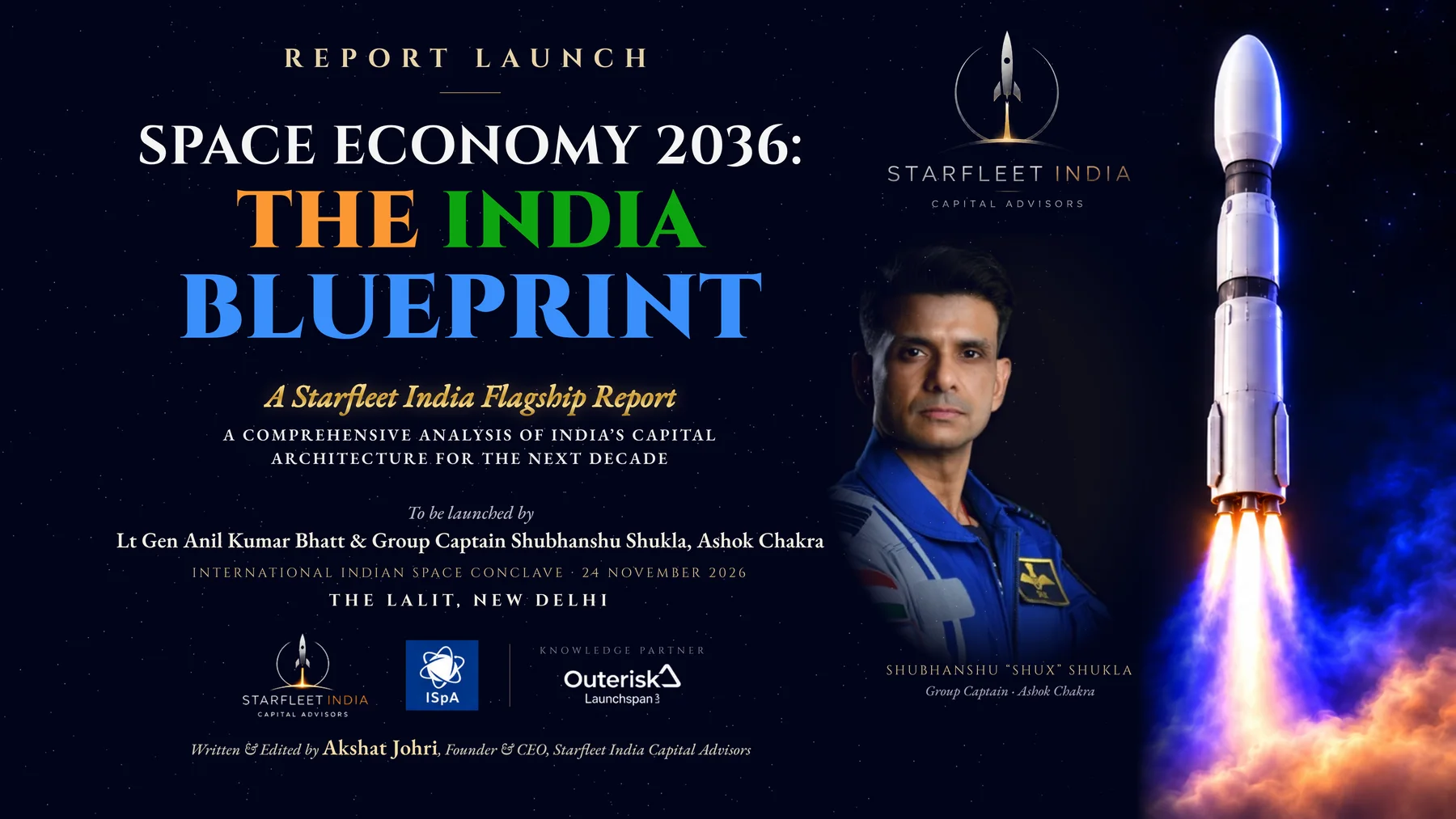
- Launch24 November 2026
- VenueInternational Indian Space Conclave · The Lalit, New Delhi
- Launched byLt Gen Anil Kumar Bhatt & Group Captain Shubhanshu Shukla, Ashok Chakra
- PartnersIndian Space Association (ISpA) · Knowledge partner: Outerisk Launchspan
Executive Summary
India has charted its ambitions in space. The challenge now is matching ambition with a capital plan.
Since 2020, India has done the hard work of opening its space sector. The Indian Space Policy 2023 settled who may build and operate space assets, IN-SPACe gave private firms a single window for authorisation, and the first public-private partnerships for Earth-observation satellites and launch vehicles have been awarded. From a single registered space start-up in 2014, India now has about 440.
The question of how the sector is financed has not been answered. Constellations, launch vehicles at serial rate, spaceports, ground networks and factories are infrastructure assets, not start-up experiments. India does not lack capital: its banks, insurers, pension funds and capital markets finance about ₹11 lakh crore of infrastructure every year. What they lack in space are the structures that let them price the risk.
This report works through the financing ecosystem instrument by instrument, drawing on NASA’s COTS programme and the experience of ESA, the United Kingdom, France and Japan. It is written for policymakers who design the instruments, for the banks, insurers and funds deciding whether to lend and invest, and for the companies that must raise the money.
Akshat JohriFounder & CEO, Starfleet India Capital Advisors · New Delhi, November 2026
Contributors · Industry Perspectives
Eight voices on what it will take to finance the next decade.
Leaders from across India’s space, finance, insurance, law and international partnership communities, in the order of the themes they address.
-
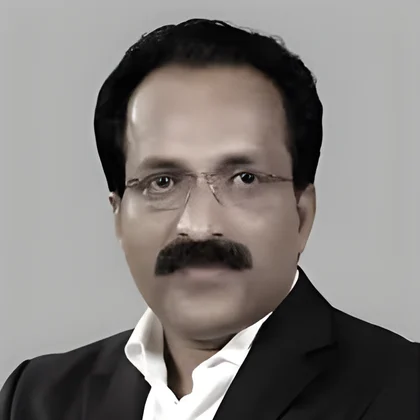
Economy
“India has proved that it can build world-class space capability at a fraction of global cost. The next decade is about turning that capability into an economy: private launch, satellite manufacturing and applications that earn revenue at home and abroad. Capital that understands long gestation and technical risk will decide how fast we get there.”
Dr S. Somanath
Former Chairman, ISRO and Secretary, Department of Space
-
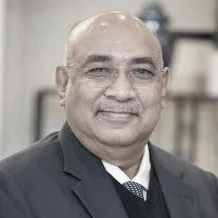
Debt & Growth Capital
“Space assets are becoming infrastructure in the fullest sense: long-lived, essential and capable of earning contracted revenues. Once ground stations, launch facilities and satellite capacity are structured with bankable contracts and credit enhancement, long-tenor debt will follow. Growth companies need that debt alongside equity, so that dilution is not the only way to scale.”
Dr P.R. Jaishankar
Former Chairman & Managing Director, IIFCL Group
-
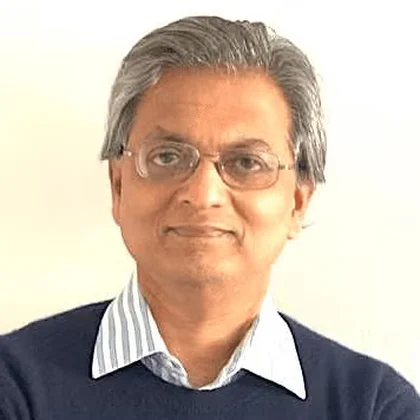
Equity
“Patient equity is the scarcest resource in space. India’s founders have shown they can build; what they need now is capital that stays through Series B and C, when the hardware is proven but revenue is still ramping. Deeper domestic pools, alongside global strategic investors, will let Indian companies scale without giving away their future.”
Srikanth Balachandran
Chief Financial Advisor, Starfleet India · Former CFO, Bharti Airtel and OneWeb
-
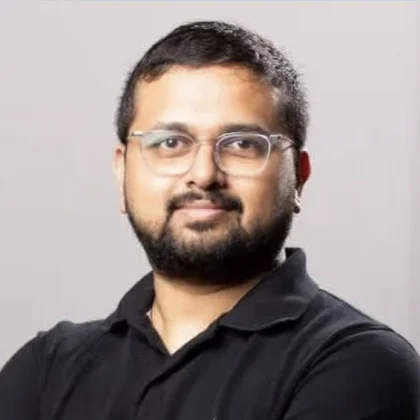
Space & Risk Insurance
“Every satellite that is financed is a risk that someone must price. A domestic insurance market with real underwriting capacity, reliable mission data and a clear liability regime will lower the cost of capital for every operator. Risk transfer is not an afterthought to financing; it is what makes financing possible.”
Abhishek Raju
Founder, Launchspan
-
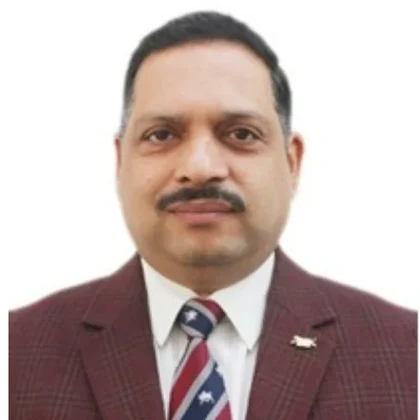
In-Space Servicing (ISAM)
“The emergence of In-Space Servicing, Assembly and Manufacturing (ISAM), particularly satellite servicing and refuelling, underscores the need to look beyond technological capabilities and address the financing requirements of the next generation of space infrastructure. By extending satellite lifespans, enhancing asset utilisation and sustaining orbital infrastructure, ISAM has the potential to create new commercial opportunities within the space economy.”
Gp Capt T.H. Anand Rao (Retd)
Director, Indian Space Association (ISpA)
-
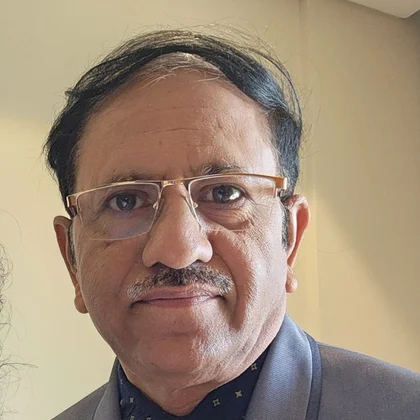
Earth Observation & Geospatial
“India’s Earth observation programme has built one of the world’s richest national data archives and a proven applications base, from Bhuvan to disaster support. The opportunity now is to turn that public investment into private revenue. Open data policies, anchor contracts from ministries and states, and ground-segment partnerships give investors the predictable demand that geospatial businesses need to scale.”
Vinod M. Bothale
Former Outstanding Scientist and Associate Director, NRSC, ISRO · Former Resident Expert, IN-SPACe, Department of Space
-

Space Act & Policy
“India’s space policy has opened the door; a Space Activities Act must now hold it open. Predictable authorisation timelines, transparent rules on foreign investment and a stable framework for data and spectrum give companies the confidence to commit capital. Good regulation is not a constraint on growth; it is the platform for it.”
Aditya Gupta
Legal & Policy Advisor, Starfleet India
-

Bilateral Trade
“Stronger bilateral trade and deeper partnerships with countries across Europe and the Middle East are crucial to India’s space ambitions, creating opportunities for investment, technology collaboration and access to new markets.”
Aditi Chakroborty
Business Development Manager, Indian Space Association
The capital question
India has built the capability. It has not yet built the capital.
Reform since 2020 has settled who will build India’s space assets: private enterprise, alongside ISRO. It has not settled how those assets will be financed once they outgrow grants and venture rounds. Money is not the constraint. What is missing are the structures that let India’s banks, insurers, pension funds and capital markets price space risk.
- US$44 bnSpace-economy target for 2033, up from US$8.4 bn in 2022–23
- ₹3.2–3.5 lakh crCapital the sector must invest over 2026–2036
- ₹19,400 crPrivate capital needed every year, about US$2 bn
- ~10×Gap between that need and today’s startup equity flow
Sources: Space Foundation (2025); Government of India decadal vision; report Chapter 3, Table 3.1. Converted at ₹95 to the US dollar.
The financing gap
About ₹19,400 crore of private capital a year, to 2036.
Startup equity supplies roughly a tenth of that, and the public catalytic funds about a hundredth. Grants and venture money cannot close the gap on their own; debt, contracts and institutional investors must. The framework in this report is built to bring them in.
- Private capital required each year, 2026–36 ₹19,400 cr
- Department of Space capital outlay, 2026–27 ₹6,376 cr
- Startup equity raised, current run-rate ₹1,900–2,400 cr
- Budgetary support to NSIL, 2026–27 ₹1,403 cr
- Antariksh venture fund, planned a year ₹150–250 cr
- Technology Adoption Fund, indicative a year about ₹100 cr
- Requirement
- Public budgets
- Private equity
- Public catalytic funds
Sources: Union Budget 2026–27; Tracxn (July 2026); IN-SPACe; report Chapter 3, Table 3.1. Startup equity at US$200–250 million a year.
01 · The four numbers that frame the task
From outlook to capital: investors finance only one of these.
Discussions of the space economy routinely confuse four numbers. The confusion matters, because only the last of them is what must actually be financed.
-
Space economy
outlook
US$44 bn by 2033
From US$8.4 bn in 2022–23, about 2% of the world’s; includes US$11 bn of exports. The global figure was US$686 bn in 2025.
The size of the prize
Includes downstream activity, so it overstates what can be financed directly.
-
Addressable market
TAM
Mostly institutional
At home: government, defence, states and PSUs buying EO, satcom and PNT. Abroad: decision-ready EO, satcom, launch, ground systems and terminals.
Where demand could come from
A ceiling, not a forecast. It becomes financeable only as signed, funded contracts.
-
Annual revenue
cash flow
+US$35.6 bn a year
Additional revenue needed a year by 2033 to reach the target from the 2022 base.
What lenders underwrite
Contracted, recurring, creditworthy revenue sets the cost of capital.
-
Capital investment
capex
₹3.2–3.5 lakh cr
Over 2026–2036. Public budgets can carry ₹1.35–1.45 lakh crore; private balance sheets must carry ₹1.8–2.0 lakh crore.
What must be financed
Roughly ten times today’s startup equity flow.
02 · Five technologies reshaping the market
Each changes a business model, and each sits at a different point on the road from grant to bank loan.
- Grants and milestone fundingOrbital data centres · In-space servicing
- Demonstrated, not yet priced
- Blocked by a single conditionDirect-to-device
- Financeable on contracted demandReusability · Climate monitoring
-
Ready
Reusability
What changes
Recoverable first stages turn launch into an operations business with low marginal cost.
What would unlock it
Multi-year launch manifests that guarantee cadence; insurers able to price reflown hardware.
-
Ready
Climate monitoring
What changes
EO for crops, floods and cyclones becomes a recurring public service.
What would unlock it
Multi-year purchase contracts with committed minimums; green-bond eligibility.
-
One condition
Direct-to-device
What changes
Satellites connect ordinary phones where towers cannot reach.
What would unlock it
Certainty on spectrum pricing, the largest single input cost.
-
Grant stage
In-space servicing
What changes
Refuelling, repair and deorbit extend asset lives.
What would unlock it
A demonstrated, insurable docking; situational awareness is financeable sooner.
-
Grant stage
Orbital data centres
What changes
Compute and storage move to orbit for AI and data sovereignty.
What would unlock it
A flown demonstrator and a priced service.
03 · The Space Finance Framework
Eight pillars, one chain.
Each pillar produces the condition the next one needs: a technology proven with public money wins a funded contract, the contract becomes a credit a bank will lend against, and the stabilised asset is finally owned by investors who need no public support. Public money is concentrated at the start and falls away as evidence builds.
1Lifecycle-based capital
A published funding ladder; an India Space Growth Fund at GIFT IFSC; a space fund-of-funds window.
2Milestone-based public funding
Standard milestone and IP templates; a route from every successful grant into procurement.
3Anchor demand
A three-year statement of funded civil demand; competitive, multi-provider awards; QCBS over L1.
4PPPs for infrastructure
Model contracts with payment security, lender step-in and capped termination; decommissioning reserves.
5Credit enhancement
A space credit-enhancement window with partial guarantees, payment-risk cover and first-loss capital.
6Insurance and risk data
A loss database, a first-mission risk pool, parametric pilots and a three-layer liability law.
7Export credit
A single export-finance window at Exim Bank; buyer credit from in-orbit acceptance.
8Institutional capital
Infrastructure status for launch, test and ground assets; disclosure standards; bonds, InvITs, green bonds.
How the chain works: one Earth-observation satellite
- A milestone grant proves the payload (Pillar 2).
- A three-year data-purchase contract from a ministry gives it revenue (3).
- A bank lends against that contract, backed by a partial guarantee and in-orbit insurance (5 and 6).
- The satellite sells imagery abroad on Exim buyer credit (7).
- After two years of payment data the asset is refinanced through a bond or InvIT (8), and the public money moves on to the next firm.
04 · The road to 2036
Three phases, each gated by evidence rather than by a date.
No instrument is scaled until the one before it has produced transactions and data.
-
Foundations
Funded-demand statement, model contracts, credit window, loss database, export desk, Space Finance Council.
Gate: two financial closes and one audited year of contracted revenue.
-
Scale
Two PPP pilots, first guarantee cover, first export on buyer credit, first bond refinancing; growth fund deploying.
Gate: two years of payment data; institutional investors in a placement.
-
Refinance and recycle
Operating assets refinanced through bonds, trusts and securitisation; guarantees sunset; green bonds for climate assets.
Test: capital raised without public support, and its cost against 2026.
05 · Ten recommendations to act on first
53 recommendations. These ten unlock most of the others.
Ten of the report’s recommendations need a change in law, regulation or rules; the other 43 can proceed under existing powers. Each has a lead institution and a date.
-
Pillar 1
Lead: DoS, IN-SPACe, MoF, IFSCA By: 2028
Launch an India Space Growth Fund at GIFT IFSC
US$500 million to 1 billion, privately managed; public anchor capped at 25 per cent, with a sunset.
-
Pillar 2
Lead: DoS, IN-SPACe, NSIL By: 2027
Give every grant a route to procurement
Technology reaching TRL 7–8 with TAF money gets a stated path into ISRO, NSIL, defence or ministry orders.
-
Pillar 3
Lead: DoS, NSIL, IN-SPACe, MoF By: 2027–28
Buy services, not satellites
A rolling three-year statement of funded civil demand; COTS-style milestone payments; two pilot service contracts.
-
Pillar 4
Lead: IN-SPACe, DoS, DEA, NSIL By: 2027
Make public space contracts bankable
Standard schedules for payment security, lender step-in and operator substitution; capped, disclosed termination payments.
-
Pillar 5
Lead: MoF, NaBFID, NCGTC, SIDBI By: 2028
Open a space credit-enhancement window
Partial guarantees, payment-risk cover and first-loss capital; capped, priced and sunset.
-
Pillar 6
Lead: IN-SPACe, ISRO, GIC Re, IRDAI By: 2028
Build a national space risk pool and loss database
A shared loss database and a ₹1,500–2,000 crore first-mission pool sponsored by GIC Re.
-
Pillar 6
Lead: DoS, Ministry of Law, Parliament By: Draft 2027
Enact a three-layer space liability law
An insured operator layer, a capped State indemnity and a domestic remedy for victims.
-
Pillar 7
Lead: Exim Bank, ECGC By: 2026–27
Open a single space-export finance window at Exim Bank
One desk to screen, structure and close export deals; annual space-export statistics.
-
Pillar 8
Lead: DEA, DoS By: 2028
Grant infrastructure status to launch, test and ground assets
Opens the door to infrastructure lenders and infrastructure trusts.
-
Pillar 8
Lead: Sponsor, IN-SPACe, SEBI By: 2029–31
Pilot India’s first space-infrastructure InvIT
At least three ground-network portfolios in one trust, after 24 months of operating data.
The transition from grants to capital markets is not a funding reform. It is the moment India’s space ambition stops being a programme and becomes an economy.
Space Economy 2036: The India BlueprintJoin us at the launch, or request the full report.
24 November 2026 · International Indian Space Conclave · The Lalit, New Delhi. Write to us for a copy of the report or to discuss its findings.